Walk into any Manhattan gym and you'll hear this argument playing out near the treadmills. Committed cardio fans point to the calorie counter on their machines. Lifters point to their physiques. Both groups are convinced they have fat loss figured out.
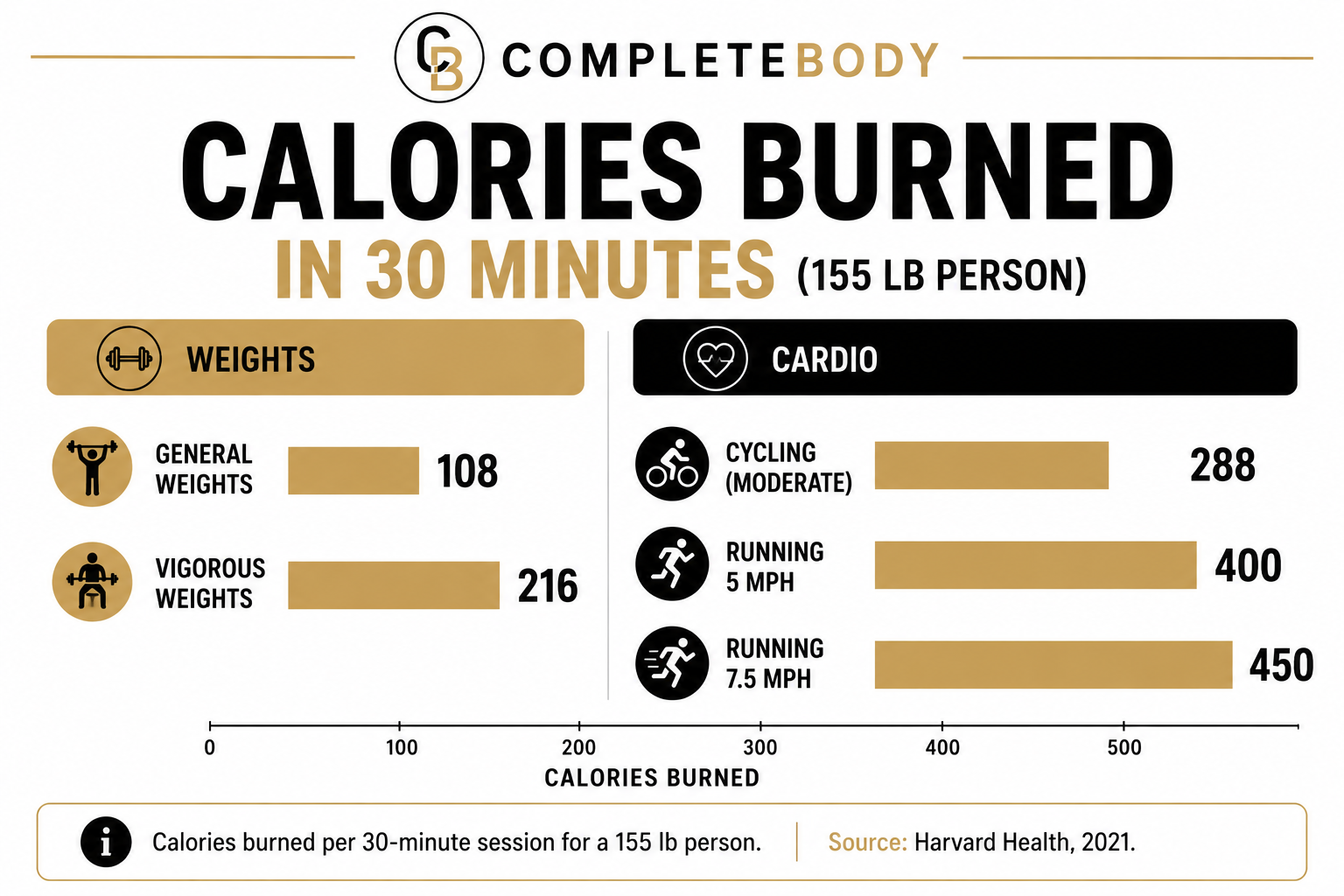
Here's what actually settles the debate: a 155-pound person burns approximately 288 calories running at 5 mph for 30 minutes, compared to 108 calories in a general weight-lifting session (Harvard Health, 2021). Cardio wins the in-session math. But a 2025 peer-reviewed meta-analysis found that when cardio and resistance training sessions are matched for total work volume, fat loss outcomes are virtually identical (PMC). And weight training keeps your metabolism elevated for up to 38 hours after you leave the gym.
The real debate isn't cardio versus weights. It's about understanding what each approach does, and how to combine them intelligently. Here's what the current science says, and what certified trainers at CompleteBody NYC actually program for clients chasing lasting results.
Key Takeaways
- Cardio burns 2 to 4 times more calories during a session than weight training for the same duration (Harvard Health, 2021)
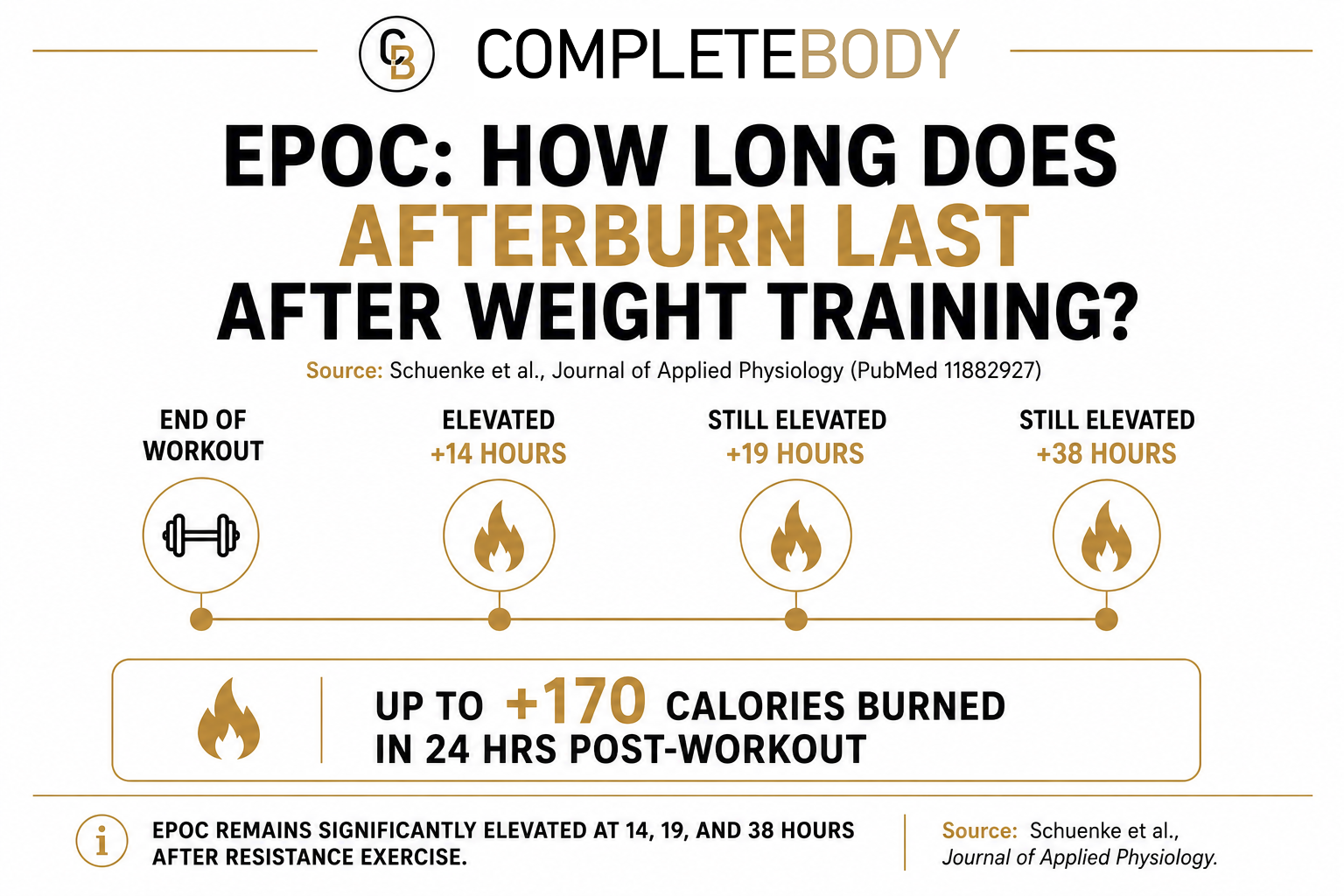
- Weight training elevates metabolism for up to 38 hours after the workout ends, generating up to 170 extra calories burned via EPOC (ACE Fitness)
- A 2025 meta-analysis found no significant fat-loss difference between cardio and weight training once workout volume is equalized (PMC)
- Resistance training is the only approach proven to preserve lean muscle during fat loss, protecting your resting metabolism long-term (PMC)
- The 2024 CardioRACE trial confirmed combining both modes produces the best body composition outcomes overall
How Many Calories Does Cardio Actually Burn Per Session?
Cardio burns substantially more calories per session than weight training, and the numbers from Harvard Health make this concrete. A 155-pound person burns 288 calories running at 5 mph for 30 minutes, 450 calories running at 7.5 mph, and 252 calories cycling at moderate intensity (Harvard Health, 2021). A general weight-lifting session burns 108 calories in the same window. That's a real, significant difference.
If you're trying to create a calorie deficit on a tight schedule, 30 minutes of running is simply more calorie-efficient than 30 minutes of bench press. No amount of nuance changes this basic math.
What kind of cardio makes the biggest difference? High-intensity options like sprint intervals, rowing, and stair climbing burn more calories than steady-state jogging, but they're also harder to sustain consistently across a full week. For most people, the best cardio is the kind they'll actually complete three to four times per week. At CompleteBody's group fitness classes, structured formats including cycling, HIIT, and kickboxing keep intensity in the target zone without requiring individual programming decisions every session.
Is cardio alone enough to lose significant body fat? The research suggests not, and the reasons come down to what happens in the other 23.5 hours of your day.
Does Weight Training Burn Enough Calories to Matter?
Weight training burns fewer calories per session, but this framing misses how resistance exercise actually works. A 155-pound person doing vigorous weight training burns 216 calories in 30 minutes, still less than most cardio options (Harvard Health, 2021). What changes the picture is the type of training and how your body responds to it over time.
Compound movements, specifically squats, deadlifts, rows, and overhead presses, recruit large muscle groups simultaneously and generate significantly more metabolic stress than isolation exercises. This metabolic stress drives the post-workout calorie burn covered in the next section. The more muscle you engage during a session, the greater the physiological recovery demand afterward.
Weight training also builds lean muscle tissue over weeks and months. Each pound of muscle burns approximately 6 to 7 calories per day at rest, according to body-imaging research cited by ACE Fitness (2018). The popular "50 calories per pound of muscle" figure is a myth, but adding 10 pounds of lean mass through consistent training still adds 60 to 70 calories to your daily resting burn. Compounded across months and years, this accumulates into a meaningful metabolic advantage.
The certified trainers at CompleteBody's personal training program design resistance protocols built around progressive overload because clients who get consistently stronger tend to see better body composition results than those who stay comfortable. Progression, not just effort, is what separates a productive weight-training program from a long-term maintenance routine.
What Is EPOC, and Why Does It Shift the Fat-Loss Calculation?
EPOC, or Excess Post-Exercise Oxygen Consumption, is the elevated calorie burn that continues after your workout ends. High-intensity exercise can generate up to 170 additional calories burned in the 24 hours following a session, and this afterburn effect contributes 6 to 15% of the total energy cost of high-intensity training (ACE Fitness). Heavy resistance training produces a larger EPOC response than aerobic cycling or circuit-style training at matched intensities.
A foundational study published in the Journal of Applied Physiology found that resistance exercise significantly elevated oxygen consumption above resting baseline at 14, 19, and 38 hours after the workout ended (PubMed, Schuenke et al.). This finding extended the previously accepted 16-hour EPOC window by more than a full day. In practical terms, a Monday morning lifting session can still be burning extra calories on Tuesday night.
According to ACE Fitness research, high-intensity resistance exercise generates a measurably larger post-workout calorie burn than aerobic cycling at equivalent perceived intensities. For someone training three to four times per week, this EPOC accumulates into a significant metabolic advantage that never appears on any in-session calorie counter.
This is exactly why the "cardio burns more calories" argument is incomplete. The treadmill screen shows what burned during the session. It doesn't show the 38 hours of elevated metabolism that follow a heavy compound lifting workout.
What Does the Latest Research Say About Cardio vs. Weights for Fat Loss?
The most current peer-reviewed evidence puts the cardio-versus-weights debate into sharper focus. A 2025 meta-analysis published in PMC found that aerobic training reduced fat mass by a mean of 1.06 kg more than resistance training alone in interventions lasting 10 or more weeks (PMC, 2025). That sounds like a win for cardio. But the same analysis found that when exercise workloads were equated between groups, the significant difference disappeared entirely.
This finding changes the entire framing of the debate. The cardio groups in most studies simply accumulated more total work. When you match the actual training dose, neither mode is meaningfully superior for fat loss.
What this means in practice: The cardio-vs-weights debate often conflates training mode with training volume. Most cardio sessions naturally accumulate more minutes than weight sessions, which is why cardio appears to win in uncontrolled comparisons. Match the total effort, and the gap closes. Total weekly training volume matters more than whether you choose a barbell or a treadmill.
A separate 2025 systematic review found that adding resistance training to a dietary weight-loss program produced significantly greater fat mass reduction (SMD: -0.36, high certainty) and meaningfully better preservation of fat-free mass compared to diet alone (PMC, Binmahfoz et al.). This high-certainty finding is worth stating plainly: resistance training during a caloric deficit beats diet-only approaches for body composition, not just for strength and muscle.
According to the 2025 PMC systematic review, adults who added resistance training to a dietary weight-loss program lost significantly more fat mass than those who dieted without exercise, with a high-certainty evidence rating across multiple randomized trials (SMD: -0.36, p less than 0.00001). This makes resistance training one of the most evidence-supported interventions for improving body composition during intentional weight loss.
Which Approach Preserves Muscle While You Lose Fat?
Muscle preservation during weight loss is where resistance training has a clear advantage. A 2025 systematic review found that resistance training added to dietary weight loss produced significantly better preservation of fat-free mass (SMD: +0.40, moderate certainty) compared to diet alone (PMC). Cardio, particularly high-volume endurance training in a caloric deficit, doesn't provide this protection.
Why does this matter for fat loss specifically? When you lose weight through diet and cardio alone, a portion of the weight lost comes from muscle tissue. Losing muscle lowers your resting metabolic rate, which means your body burns fewer calories throughout the day. This is one reason people hit plateaus and experience weight regain after cardio-only programs: the metabolic foundation erodes.
Harvard-affiliated researchers found that men who performed 20 minutes of daily weight training experienced less age-related increase in abdominal fat than men who spent the same time on aerobic exercise (Harvard Health). For women, resistance training during fat-loss phases is especially valuable because lower baseline muscle mass makes protecting lean tissue a higher priority from the start.
At CompleteBody's Midtown East location, trainers regularly work with clients who've plateaued after months of cardio-only programs. The typical pattern: weight loss stalled, fatigue increasing, body composition not improving despite continued effort. The intervention, almost universally, involves adding progressive resistance training to their program.
What Do NYC Trainers Actually Recommend?
The most consistent recommendation from certified strength and conditioning specialists at CompleteBody: do both, but program them strategically. The 2024 CardioRACE trial, a one-year randomized controlled study of approximately 400 overweight adults, confirmed that combined training produced the most significant drops in body fat percentage and cardiovascular risk markers (Harvard Health). A strength-only group did not reach significance versus the control group for cardiovascular markers. The combined group did.
For most clients working toward fat loss without a competitive athletic goal, the framework looks like this:
Three days per week of resistance training:
Focus on compound movements: squats, deadlifts, rows, presses, and carries
Progressive overload every two to three weeks (add load or reps consistently)
Sessions of 45 to 60 minutes with 2 to 3 minutes of rest between heavy sets
Two to three days per week of cardio:
One steady-state session (30 to 45 minutes, conversational pace)
One to two higher-intensity sessions (20 to 30 minutes, interval format)
Structured group fitness classes count here and often sustain adherence better than solo treadmill work
This framework keeps total weekly volume high enough to drive fat loss while preserving and building lean mass. It also prevents the metabolic slowdown that occurs when cardio volume climbs without resistance training to counterbalance it. Think of cardio as the deficit driver and weight training as the metabolism protector.
If you're commuting through Midtown or Grand Central, CompleteBody Grand Central offers the equipment, class schedule, and certified trainers to run this full program without adding a detour to your day. For clients in lower Manhattan, the Financial District location has a full free-weight area and group fitness studio in the same facility.
The ACSM's position stands recommend at least 150 to 300 minutes of moderate-intensity cardio per week alongside two or more days of resistance training for effective weight management. The combined framework above meets these guidelines while prioritizing the resistance component that most NYC gym-goers are underutilizing.
Ready to Build a Program That Actually Works?
The cardio-versus-weights debate ends when you stop choosing sides. Every piece of current evidence points to the same conclusion: a combined approach, programmed with appropriate volume and progressive intensity, outperforms either mode alone for lasting fat loss and body composition improvement.
You don't need to design this yourself. CompleteBody's certified personal trainers build individualized programs that integrate resistance training and cardio in the right ratio for your specific goals, schedule, and current fitness level. With five Manhattan locations including Grand Central, Midtown East, Financial District, Union Square, and Chelsea, there's a world-class facility within reach of wherever you work or live in Manhattan.
and meet with a certified trainer to build your fat-loss program from the ground up.
---
Frequently Asked Questions
Is cardio or weight training better for losing belly fat specifically?
Harvard-affiliated research found that men who performed 20 minutes of daily weight training experienced less age-related abdominal fat gain than men who spent the same time on aerobic exercise (Harvard Health). You cannot spot-reduce fat, but resistance training consistently reduces visceral (abdominal) fat when combined with a caloric deficit and tends to outperform cardio-only approaches for this specific outcome.
How much extra does weight training burn after the workout ends?
High-intensity resistance exercise can generate up to 170 additional calories burned in the 24 hours following a session, contributing 6 to 15% of the total energy cost of the workout (ACE Fitness). A PubMed study confirmed EPOC remains significantly elevated at 14, 19, and 38 hours post-workout for heavy resistance training sessions, well beyond the commonly cited 16-hour window.
Can I lose fat just by lifting weights without any cardio?
Yes, resistance training during a caloric deficit significantly reduces fat mass. A 2025 systematic review found high-certainty evidence that adding resistance training to dietary weight loss produces greater fat mass reduction than dieting alone (SMD: -0.36, p less than 0.00001) (PMC). That said, the 2024 CardioRACE trial confirmed combined training outperforms strength-only for cardiovascular health markers and overall body composition.
How many days per week should I lift vs. do cardio for fat loss?
Most evidence supports three resistance training sessions and two to three cardio sessions per week for optimal fat loss. The ACSM recommends 150 to 300 minutes of moderate-intensity cardio weekly alongside two or more strength training days for weight management. Prioritize the resistance training and add cardio around it rather than the reverse.
Does building muscle really speed up your metabolism?
Each pound of muscle burns approximately 6 to 7 calories per day at rest, according to body-composition research cited by ACE Fitness (2018). Adding 10 pounds of lean mass over a consistent training year contributes 60 to 70 extra calories to your daily resting burn, compounding into a meaningful long-term metabolic advantage that makes fat loss progressively easier to sustain.
---
Conclusion
Cardio wins the in-session calorie contest. Weight training wins the 38-hour post-workout calorie contest, the muscle preservation contest, and the long-term metabolism contest. And when both are programmed together at sufficient volume, the 2024 CardioRACE trial data confirms better outcomes than either approach alone.
Stop thinking about this as either-or. Think of it as a prescription: resistance training to build and protect the muscle that keeps your metabolism elevated, and cardio to generate the caloric deficit that drives fat loss. Both have a specific job. Neither does the other's job particularly well.
Ready to build a program that combines both intelligently? Book a complimentary trial at CompleteBody and work with a certified trainer at any of our five Manhattan locations to start seeing real results.